

What Animals Don't Have Necks In Wisconsin
Here in Wisconsin, we like to recollect we know our badgers. Nosotros find them on our state flag, emblazoned on t-shirts and performing more than the occasional pushup at football games. But for a state that loves its badgers, have yous actually seen one? Like, a real-life badger?
David Drake has—twice. One time at Pope Farm Conservancy in Middleton and once while hiking in New United mexican states. The Extension Wildlife Specialist and professor in UW–Madison's Department of Wildlife Ecology says that's just how badgers like it. "They're relatively secretive." And while its overseas cousin, the honey badger, is infamous for its aggression, the American annoy isn't likely to attack to people if given space. "They prefer to run abroad from you and go back to the burrow."
Mysterious? Solitary? People-averse? Badgers perfected the fine art of social distancing long before the term was conversational. If you lot're feeling uninspired with your current routine, David Drake offers a few tips to avert people like a true professional.
Smell Bad
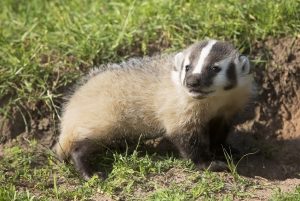
The American badger is a stocky mammal that measures up to iii feet in length and tin can weigh upward to 50 lbs. Their fur is grizzled grey, and while badgers' beefy frame renders them waddlers aboveground, their long claws brand them expert diggers. Like their skunk cousins, badgers have scent glands that emit not-so-pleasant odors when threatened. While not as pungent as that of skunks, their smell ensures everyone keeps their distance—or at least covers their nose.
Live Underground
Drake provides two reasons why badgers are and so hard to spot: they're nocturnal, and then they're active at night, and they're "fossorial," and then they live primarily secret. Because of their digging prowess, badgers don't always need to venture aboveground to hunt. They tin can dig their style into the den of another unsuspecting ground-dweller—similar a chipmunk or groundhog—and make a swift meal. They can also shop food in their hugger-mugger den, enjoying the benefits of having shopped during off-elevation hours.
Ditch Tracking Devices
Despite their popular appeal, much is still unknown about badgers. They don't exactly make piece of cake research subjects. Drake points to efforts of a colleague in the Department of Wildlife Ecology, Tim Van Deelen, who struggled to get expert information on badgers. Because of their wedge-shaped heads, badgers shrugged off the radio collars fastened around their necks. Van Deelen so implanted a radio under the peel of the abdomen. The radio signal, withal, didn't travel well through soil, making it difficult to track their whereabouts. Badgers, it seems, prefer life off the filigree.
If You lot Want To Be A Badger
And so, if yous really want to see a annoy, where can yous find one? Drake says badgers prefer open lands similar prairies and oak savannahs in the southern third of the state where the soil is easy to dig through. Although badgers tin can alive on the edges of woodlands, they don't like heavily forested areas where the soil is threaded with fibrous root systems that impede earthworks. "People who see them with some regularity are farmers. That's nicely tilled soil then information technology's easy to dig through. There are a lot of rodents—a good food source." On a tractor, farmers also take the advantage of an aerial view that allows them to see badgers from a distance.
We could all learn a few lessons from our iconic country animate being. And although nobody tin find the thing, isolation doesn't mean the badger is adored any less.
And what if you do see 1? Admire, just don't get besides close. Badgers like their distance—at least half-dozen feet.
If you do run across a annoy, consider reporting it to the Wisconsin Badger Genetics Project and the Wisconsin Natural Heritage Inventory, which track sightings across the state.
Source: https://naturalresources.extension.wisc.edu/time-to-badger-down-what-we-can-learn-from-wisconsins-state-animal/
Posted by: oliveirahileboseek.blogspot.com
0 Response to "What Animals Don't Have Necks In Wisconsin"
Post a Comment