

What Animals Can Be Found In The Western Region Of Texas
| AMS 105- American W: Images and Identities | 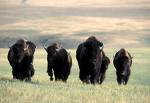 |
The wildlife of the American West is represented by similar sub-regions the we report in this course but are referred to every bit ecosystems. These ecosystems are a community of living organisms interacting with specific not-living environments over time. These can be quite circuitous, overlapping and cleaved down into sub-categories. Each species or population has a complex relationship or econiche within that ecosystem. Native Americans were far more aware of these interrelationships and this is well defined in their languages and classification systems. In fact they had two terms for each creature, one sacred and ane secular. The sacred term reflected the uniqueness of the brute endowed by the creator. These regional ecosystems were evolving for millions of years and then humans arrived on the scene. Native Americans impacted the environment from ~30,000 years ago to ~ 500 years ago. European American, African American and Asian-Pacific Islander people had a much greater impact on these ecosystems from virtually 500 years ago (A.D.1500) to the nowadays. The most dramatic and devastating changes occurred offset with the Homestead Act of 1862 (in Canada Dominions Country Act 1872) that gave 160 acres of federal land to a pioneer family unit to farm for five years. This reached a boom in the 1870s with heavy rains merely went bust in the 1890s with draught and harsh winters. Homestead laws in the early on 1900'south gave settlers 640 acres of free federal state. Railroads were also given costless country by the government and in turn they used railhead towns to sell land plots in towns to immigrants from Europe.
Today, conservationists argue about what ecosystem time menses should be restored in diverse preservation/conservation projects. Mostly almost use the ecosystems observed by Lewis and Clark between 1804-1806 as goal for restoration knowing full well that such would be virtually impossible. However, some of the subtle relationships are existence discovered every bit some of these wild fauna are put dorsum together in various land conservancy projects. The Nature Conservancy is one of the well-nigh comprehensive of these movements in the various ecosystems in the American West.
For the class nosotros volition look at four ecosystems that correspond to the cultural/historical sub-regions of the American West. Each of these have sub-categories and variations. Likewise, some life forms are adaptable to multiple ecosystems, like Mt. Lions, Grizzly Bear, Golden Hawkeye, Raven or Coyote.
| ECOSYSTEM | REGION (S) | |
| Great Plains Prairie | Plains; Plateau | |
| Montane | Rocky Mountains; Sierra/Cascades | |
| Sonoran Desert | Southwest; S. California | |
| Pacific Coast Rainforest | Northwest Coast; N. California |
The Great Plains Prairie ecosystem emerged between the Rocky Mountains and Mississippi River Basin. It traditional consisted of three subsystems called alpine grass in the prairie and short grass in the drier high altitude plains with a transitional mixed grass area of key Nebraska, Kansas and Texas. These grasslands supported big herbivores like bison, pronghorn, and deer with a smaller community grouping of prairie dog, gophers, jack rabbit and kangaroo rats. Predators paralleled with grizzly bear, wolves, and mt. king of beasts with black footed ferret, badger, golden eagle, burrowing owl, badger and rattlesnake. Along the rivers with cottonwood and willow many other animals hung out, sometimes going out on the grasslands. Many migratory birds (Sandhill Cranes) would come through the Plains to more southern winter locales.
| Common Proper name | Scientific Name | Notes |
American Bison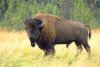 | Bison bison | short grass and long grass |
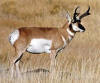 Pronghorn Antelope Pronghorn Antelope | Antilocapra americana | brusque grass /sagebrush; more than goat-similar |
Blueish Grama Grass | Bouteloua gracilis | native bunch grass that is very drought resistant |
| Buffalo Grass | Buchloe dactyloides | native perennial grass, drought resistant and alkali tolerant |
| Mule Dear (Blackness Tail Deer) | Odocoileus hemionus | throughout the Westward |
| Black Tailed Jackrabbit | Lepus californicus | one of three species w/ greatest range in plains and desert |
Sagebrush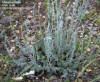 | Artemisia frigida | drought resistant and high in protein for herbivores |
| Whitetail Deer | O. virginianus | long grass prairie and Eastern woodland wood |
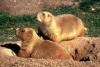 Blacktailed Prairie Domestic dog Blacktailed Prairie Domestic dog | Cynomys gunnison | Prairie canis familiaris towns in short grass and mixed grass; endangered |
Blackfooted Ferret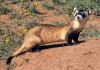 | Mustela nigripes | prairie dog towns; almost extinct |
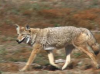 Coyote Coyote | Canis latrans | throughout the Westward |
| Grey wolf | Canis lupus | rare in lower 48 |
Ord's Kangaroo Rat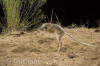 | Dipodomys ordi | i of many rats, mice, gophers nocturnal |
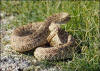 Western Diamondback Rattlesnake Western Diamondback Rattlesnake | Crotalus altrox | largest of a number of species in the plains and deserts |
American Annoy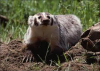 | Taxidea taxis | large fearless fellow member of the weasel family |
| Western Grayness Trick | Urocyon cinereoargenteus | mostly Western with the ruddy fox in the East |
Golden Eagle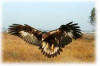 | Aquila chrysaetos | largest eagle and higest soarer |
| Prairie Falcon | Falco mexicanus | Plains-prairie and desrt open up spaces |
Greater Prairie Chicken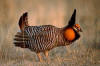 | Tympanuchus cupido | tall grass grouse; replaced by introduced ring neck pheasant (China) |
| Western Meadowlark | Sturnella neglecta | throughout the West |
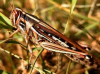 Ii-Striped Grasshopper Ii-Striped Grasshopper | Melanoplus bivittatus | most common in N. America can survive upwardly to 6500' |
The Great Plains region of the American West went through tremendous changes in the 19th and 20th centuries. At the middle of these changes was the near extinction of the American Bison which in plough affected not only the ecosystem but also the Plains Indian Cultures. The devastation of the American Bison was a military strategy to defeat the tough horseman of the Plains and produced an economic boost to the fur trade when the beaver pelt merchandise declined.
The Homestead Acts encouraged further changes to the water tables, soil and ecosystems that resulted in catastrophic changes that resulted the 1930's Dust Bowl. Further booms and busts continued in the 20th and 21st centuries with agri business organisation, fossil fuel booms, transportation shifts and population changes. Among these dramatic changes conservationists, ranchers and scholars take attempted to set up bated land (public and private) to restore some of the original Plains/Prairie ecosystems. The American Bison is seen as a focal herbivore to this ecosystem. A metaphor of this view has been called the Buffalo Commons, since the American Bison is then central to this ecosystem'southward community. Some take derided the concept as impracticable. They see the Am. Bison as an inferior species that is destructive to ranching and the cattle industry. However, the American Bison Society, the National Bison Association and the Canadian Bison Clan have shown many practical, economic and nutritional benefits to productive bison herds. Bison meat has xxx% less cholesterol and is free of chemicals. This has produced improved cooperation of Native Americans, ranchers, public herd managers and conservation organizations.
All of these changes take produced a shift from an attitude of mastery of nature to a cooperation with nature; i.east. a shift from hierarchical thinking to a holistic or systemic thinking. Native wild fauna similar wolves, ferrets, prairie dogs, rattlesnakes, bison, eagles, prairie chickens are valued and in some cases saved from extinction. Many of these creatures were considered 'varmints'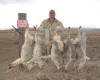 when I was growing up in the 1950s and 1960s. I remember being on a fossil hunting trip in Wyoming and finding ranchers using dynamite to accident-up Prairie Dog Towns to get rid of 'varmints'. Recently, nosotros noticed on a trip through North Dakota in the oil boom area of Williston, ND that any talk of environmental was considered a liberal agenda. Some ranchers and Native Americans do non connect conservation as a political issue. Ted Turner's Montana Grill venture is a good example.
In 2012 nosotros fabricated a trip to a public bison refuge called the National Bison Range Wildlife Refuge on the Flathead Indian Reservation in Montana. Pronghorn, deer, bison, elk and golden eagle were in abundance. At that place were about 500 American Bison in this particular refuge. The great bison herds were once expanding out of the Plains into the Plateau and Eastern Woodlands with a subspecies evolving into a smaller browser. The American Bison may have numbered 30-40 meg. They were reduced to 1,091 by 1889. It was hunting sportsman and ranchers that managed to salve the species. Diverse preserves and private herds have returned their numbers to almost 200,000. The Tallgrass Prairie Preserve in Oklahoma holds about 2,500 head and Yellowstone National Park has well-nigh 3,500 head. On Catalina Island bison were not native, just introduced for a Zane Gray western pic. The herd grew to 600 and were causing problems. The conservancy on the island decided to continue the bison for tourists but have reduced the herd to 150-200. Some of the surplus animals were relocated to the Rosebud Indian (Lakota) Reservation in South Dakota. They got to go home!
The Montane ecosystem every bit the proper noun implies is associated with mount elevations of v,000 feet and to a higher place in the Rocky Mountains, Cascade Mountains and Sierra Mountains of the American W. Variation of species is dependent on n-facing slopes having more than water that allows for denser forests and water loving trees like quaking aspen. lower slops tend to favor ponderosa pine with fir and lodgepole pine thriving at higher elevations. The trees support squirrels, tree martin, weasel, porcupine, beaver, owls, woodpeckers, jays and chipmunks. Grizzly conduct, black carry, wolf, coyote and mt. panthera leo are dependent on deer, mountain goat, bighorn sheep and elk. Am. bison were moving into these areas at the lower elevations through the mountain passes.
| Common Name | Scientific Proper noun | Notes |
Ponderosa Pine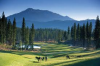 | Pinus ponderosa | throughout Western Mts; lower elevations |
| Douglas Fir | Pseudotsuga menziesii | lower elevations and upwardly to 9,000' |
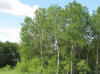 Quaking Aspen Quaking Aspen | Populus tremuloides | like other poplars favors water areas |
Lodgepole Pino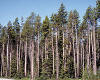 | Pinus contorta | college elevations; Native Americans used saplings for tipi poles and travois |
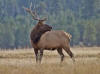 Elk(Wapiti) Elk(Wapiti) | Cervus candensis | open up forest and mt. meadows; Wapiti is a Native American discussion pregnant 'white rump' |
| Blacktailed Deer | Odocoileus hemionus | desert and montane adaptations |
Bighorn Sheep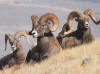 | Ovis canadensis | montane slopes and desert |
 Rocky Mountain Goat Rocky Mountain Goat | Oreamnos americanus | high mountains higher up timberline |
Grizzly Bear | Ursus horribilis | open areasand nocturnal habits |
| Black Comport | Ursus americanus | more wood and diurnal |
 Mountain King of beasts Mountain King of beasts | Felis concolor | mt and desert adaptations |
| Bobcat | Lynx rufus | mount and desert |
Wolf | Canis lupus | exterminated in the lower 48 |
| Beaver | Castor canadensis | exterminated in most of its range |
| Porcupine | Erethizon dorsatum | montane and woodland accommodation |
| Tree Martin | Martes americana | fir and bandbox forests |
| Smashing Horned Owl | Bubo virginianus | all ecosystems w/ trees |
| Peregrine falcon | Falco peregrinus | cliffs, open areas |
| Moose | Alces alces | lake and riverine |
| Mountain Chickadee | Parus gambeli | mt. forests |
| Downy Woodpecker | Picoides pubescens | mt. forests, higher than Hairy Woodpecker |
| Steller's Jay | Cyanocitta stelleri | conifer/pine forests |
| Western Bluebird | Sialia mexicana | open woods |
The Montane Ecosystem of the Westward fared a bit better than the Plains-Prairie Ecosystem. The initial impact was mining since these areas contained precious metals like gilded and argent. Later copper, chromium, tungsten and pb were mined. Mining (shaft mining) initially was rather low bear upon until diverse forms of highly commercial strip mining came into the scene where unabridged hillsides would be dynamited or washed away. This kind of mining continues today. The forest industry did far more than damage, peculiarly clear cutting that caused tremendous erosion. Certain areas, like the Bighorn Mountains were totally burned downwards in huge fires. Today, one of the great debates is fire management. When a burn starts 'naturally' do you let it burn down only preventing loss of life and property. This was put to a test in the great fire in Yellowstone National Park in 1988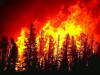 . It was decided to let the fire burn its grade and now that decision was proven to be the right ane...the re-growth and return of wild animals has been very successful. California has led the way in this regard but it withal is a difficult topic. Today, warming conditions have acquired horrific burn storm upshot because of extreme dry conditions, pine beetles and wind. California, Colorado, Arizona and New Mexico take had the worst of these fires.
The U.S. Wood Service management and National Parks in conjunction with State Forest and Parks have preserved more of the Montane Ecosystems. The outset was Yellowstone National Park (1872). At the terminate of the 19th century forest fires and logging had taken out 90 % of US forests. In the 1890s much of the Bighorn Mountains were burned. In 1910 3 million acres burned in Montana and Wyoming with considerable loss of life. In terms of wild animals the virtually controversial creatures are wolves and grizzly bears. Wolves have been successfully introduced merely their behavior is and so unpredictable. Their return has conspicuously strengthened the elk and bison herds.
The Sonoran Desert Ecosystem occurs in diverse elevations from beneath sea level to about v,000' in the California and the Southwest. There are four desert ecosystems with some overlap. They are the Basin Desert in Utah and Nevada, the Mohave in California and Chihuahua in Texas and Mexico. Many plants and animals have adapted to these differing ecosystems. The Sonoran Desert Ecosystem is unremarkably cleaved down with altitude. The Lower Sonoran < 3000 is mostly mesquite, ocotillo and saquaro cactus. The Upper Sonoran >3000' consists of juniper scrub and pinyon pino. North facing vs S facing slopes, rainfall and alkalinity of the soil are other factors producing some variations. Generally, desert plants accept huge root systems, modest leaves (or none in the case of cactus) and rather low-cal coloration all designed to bargain with estrus and lack of water.
| Mutual Proper name | Scientific Proper name | Notes |
Prickly Pear Cactus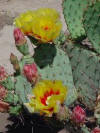 | Opuntia sp. | some species are native; tuna cactus is introduced from S. AM |
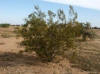 Creosote bush Creosote bush | Larrea tridentata | oil originally used equally a preservative |
| Ocotillo | Fouquieria splendens | |
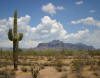 Saquaro Saquaro | Cereus gigantica | huge long living cactus; only grows in non-frost zones |
| Juniper | Juniperus communis | virtually dominant in the high desert above three,500' |
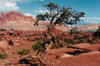 Pinyon Pino Pinyon Pino | Pinus edulis | pino nuts were a major source of nutrient to Native Americans |
Blacktail Deer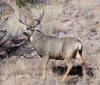 | Odocoileus hemionus | |
| Pronghorn Antetlope | Antilocapra americana | |
| Desert Bighorn | Ovis canadensis | smaller and lighter subspecies |
| Antelope Jackrabbit | Lepus alleni | |
| Desert Woodrat | Neotoma lepida | |
Western Harvest mouse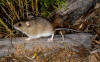 | Reithrodontomys megalotis | some desert rodents go all of their water from plants |
Coyote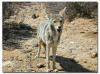 | Canis latrans | smaller and lighter in this expanse |
| Mt. Lion | Felis concolor | |
| Jaguar | Panthera onca | very rare in the SW just in one case ranged up into California |
Desert Tortoise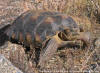 | Gopherus agassizi | endangered in many areas |
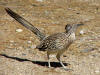 Roadrunner Roadrunner | Geococcyx californianus | actually a footing abode cuckoo |
Trap door Spider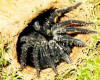 | Bothriocyrtum sp. | |
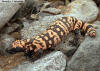 Gila Monster Gila Monster | Heloderma suspectum | toxicant is a neurotoxin, only poisonous lizard |
Harris Hawk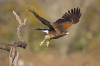 | Parabuteo unicinctus | |
Peccary (javelina)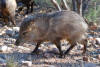 | Pecari tajacu | simply native hog |
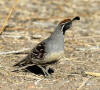 Gambel's Quail Gambel's Quail | Callipela gambelii | |
Desert Sidewinder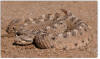 | Crotalus ceratus | |
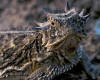 Horned Toad Horned Toad | Phrynosoma platyrhinos | really just a lizard |
| Not bad Earless Lizard | Cophosaurus texanus | |
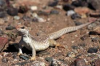 Desert Iguana Desert Iguana | Dipsosaurus dorsalis | |
Stink Bug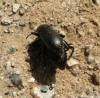 | Eleodes sp. |
The Sonoran Desert Ecosystem initially had interest from European Americans that focused on mineral resource such as aureate, silvery and copper; after uranium. Early mining techniques were low bear on with shaft mining. In some areas gemstones were found such every bit tourmaline, turquoise and opals. All over the Southwest y'all tin can find galley shafts run into a mountain to see what minerals might be had. Some areas of the Sonoran Desert were used for open range cattle ranching. These operations required extensive areas of state and as one might imagine a lack of police enforcement In New Mexico and Texas (west of the Pecos River) various cattle rustling incident caused all out wars, such as the Lincoln County Wars (1870s) involving the infamous Billy the Kid. After in various areas of the Southwest experimentation with country reclamation was conducted in the Colorado River, California and the Gila/Salt River areas. This had a much greater impact on the land with mixed results. Some preservation/conservation is in our desert national parks such equally Grand Coulee NP, Bryce NP, Arches NP and Guadalupe Mountains NP. I of the nicest that focuses on wildlife is the Arizona-Sonora Desert Museum, which is similar open creature park.
The Pacific Declension Rainforest Ecosystem is a temperate rainforest from S. Alaska, British Columbia, Washington/Oregon Coastal regions and Northern California. It is mainly dependent on the warm Japanese current coming in from the North Pacific. The sheer biomass of this temperate rainforest is 4X that of whatsoever tropical rainforest of the planet. This is mainly due to moisture and lack of fires. The rainfall varies from 70 inches to 260 inches per yr. The huge copse in this ecosystem included Sitka Spruce, Western Hemlock and Western Ruby-red Cedar in the to Coastal Redwoods in California. Along streams Big-leaf Maple and Alder were common. On the forest floor ferns, mosses and herbaceous plants is and so thick with decomposing fabric that the flooring 'moves'. Finally, the rivers were rich in fish, peculiarly salmon the returned to in that location origins upstream to spawn and die thus providing food for wildlife and nutrients to the soil. The coastal waters is i of the richest in the earth with huge kelp forests, fish and sea mammals. This as well provided nutrient for wild fauna including shorebirds, Bald Eagle, ravens, and bear. In the north along the Alaskan coast the protein was so rich that Alaskan Brown Carry developed into on of the largest predators on earth only rivaled by the Polar Carry in size.
| Common Name | Scientific Name | Notes |
Sitka Spruce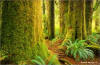 | Picea sitchensis | 200' tall; fifteen' dbh (diameter breast high) |
| Western Cherry-red Cedar | Thuja plicata | 230' alpine; 13' dbh; most used for totem poles |
| Western Hemlock | Tsuga heteropylla | 270' tall; ix' dbh; closest to the ocean |
Coastal Redwood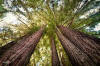 | Sequoia sempervirens | 379' tall; 26' dbh; tallest on world |
 Big Leaf Maple Big Leaf Maple | Acer macrophyllum | 115' tall |
Mountain Alder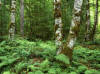 | Alnus tenufolia | 20' tall |
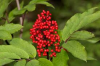 Pacific Elderberry Pacific Elderberry | Sambucus callicarpa | Alaska to N. California |
Elk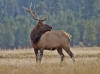 | Cervus canadensis | |
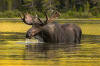 Moose Moose | Alces alces | swamps and lakes |
| Black-Tailed Deer | Odocoileus hemionus | |
| Rocky Mountain Goat | Oreamnos americanus | higher altitudes |
Dall Sheep(White Sheep)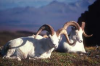 | Ovis dalli | very inaccessable areas of NW, esp. in Yukon/ Denali |
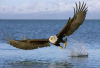 Bald Hawkeye Bald Hawkeye | Haliaeetus leucocephalus | fish hawkeye that was reduced to the NW/Alaska but is returning along both coasts |
Alaskan Brown Behave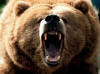 | Ursus middendorffi (arctus) | some 9 species that sometimes are included with the grizzly conduct; largest is the Kodiak 1500 ibs |
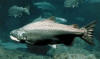 Chinook Salmon Chinook Salmon | Oncorhyonchus tshawytscha | largest of the 7 species of salmon; King Salmon is its other name |
Pacific Tree Frog | ||
| Harlequin Duck | Histrionicus histrionicus | Northern littoral waters |
Red Tree Squirrel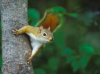 | Tamiasciurus hudsonicus | Northern Pine/bandbox forests |
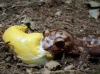 Pacific Giant Salamander Pacific Giant Salamander | Dicamptodon tenebrosus | largest salamander |
Banana Slug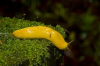 | Ariolimax columbianus | food for Pacific Giant Salamander above; UCSC mascot  |
| Northern Spotted Owl | Strix occidentalis | former growth coniferous forest |
Steller'south Jay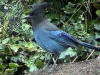 | Cyanocitta stelleri | |
| Raven | Corvus corax | |
Pacific Dogwood | Cornus nuttallii | British Columbia to S. California coastal slopes and Sierras |
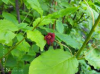 Western Burningbush Western Burningbush | Euonymus occidentalis | mountain slopes |
The Pacific Declension Rainforest was impacted most by forestry. In the Northwest Coast of Washington and Oregon with respective centers in Seattle and Portland but 10% of original growth is left. Re-growth has come up from replanting in the 20th century. The rough part of Seattle'due south waterfront was referred to every bit 'skid row' which was where logs were slide downward to the h2o for processing. Northern California's redwood forest suffered even greater destruction and only iv% original growth exists in Redwood National Park which was not established until 1968 and is poorly maintained.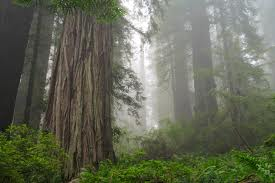 Actually, Big Bowl Redwoods State Park (the oldest in the state 1902) is in amend shape and has more to offer. The CA Gold Rush in 1849 stimulated the exploitation of timber with the influx of people. The Klondike Gold Rush in Alaska 1897-1899 had the same effect on Seattle and Vancouver. Fur trade, fishing and whaling also had a detrimental effect on the Pacific Coast Rainforest.
Finally, in the 1930s huge dams such as the Grand Coulee Dam on the Columbia River drainages changed the ecosystem by depleting the salmon compounded by overfishing. Recently to try to restore the salmon returns some smaller dams accept been removed. The dams as well brought farming , vineyards, orchards to the Eastern slopes of the Cascades. In the Olympic National Park the coastal Hoh Rainforest is ane of the nicest example of the Pacific Coast Ecosystem. The wood well-nigh feels alive when your walking through it.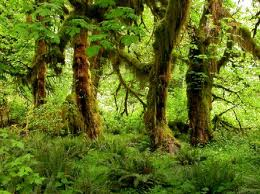
Source: https://www2.palomar.edu/users/scrouthamel/wildlife.htm
Posted by: oliveirahileboseek.blogspot.com
0 Response to "What Animals Can Be Found In The Western Region Of Texas"
Post a Comment